

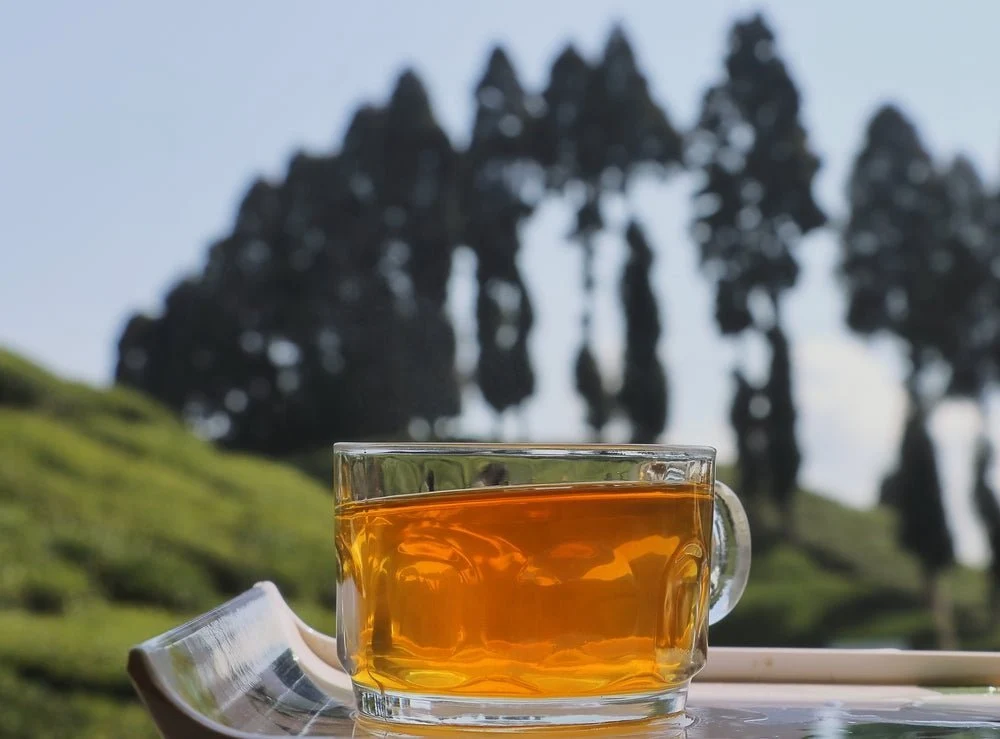

Most people who buy Darjeeling tea are buying a word, not a leaf. The word is on the packet, the packet is in a supermarket eight thousand kilometres from here, and what is inside it may have grown in Nepal, in Assam, in Kenya, or in some proportion of all three. This is not a conspiracy. It is simply what happens when a place name becomes more valuable than the place.
I live in Darjeeling. From the road above my house you can see tea bushes on almost every slope that is not built on or too steep to stand on. It is the crop that made this district and the reason most people outside India have heard of it at all. So this guide is an attempt to explain what the thing actually is — where it grows, why it tastes the way it does, what the letters on the tin mean, and how to avoid paying premium money for something that has never been within a hundred miles of these hills.
What Darjeeling tea actually is?
Darjeeling tea is tea grown, processed and manufactured within a defined area of the Darjeeling district of West Bengal, in the eastern Himalaya of India. That definition sounds bureaucratic, and it is — but the bureaucracy exists for a reason, which we will come to.
The geography does the heavy lifting. The gardens sit at elevations that run from a few hundred metres in the valleys up to around two thousand metres on the higher slopes. That range matters more than almost anything else about the tea. At altitude the temperature drops, the bushes grow slowly, and slow growth concentrates flavour in the leaf. The same plant grown fast in a hot lowland produces something perfectly drinkable and completely different.
There is also the mist. For much of the growing season the hills here spend part of every day inside cloud. The light is diffuse, the humidity is high, and the temperature swings sharply between afternoon and dawn. Wine people would call all of this terroir and charge you extra for the word. It is the same idea: a set of local conditions that cannot be transported, producing a result that cannot quite be copied.
The plant is not the one you are expecting
Most Indian tea — Assam in particular — comes from Camellia sinensis var. assamica, a broad-leafed variety native to the region.
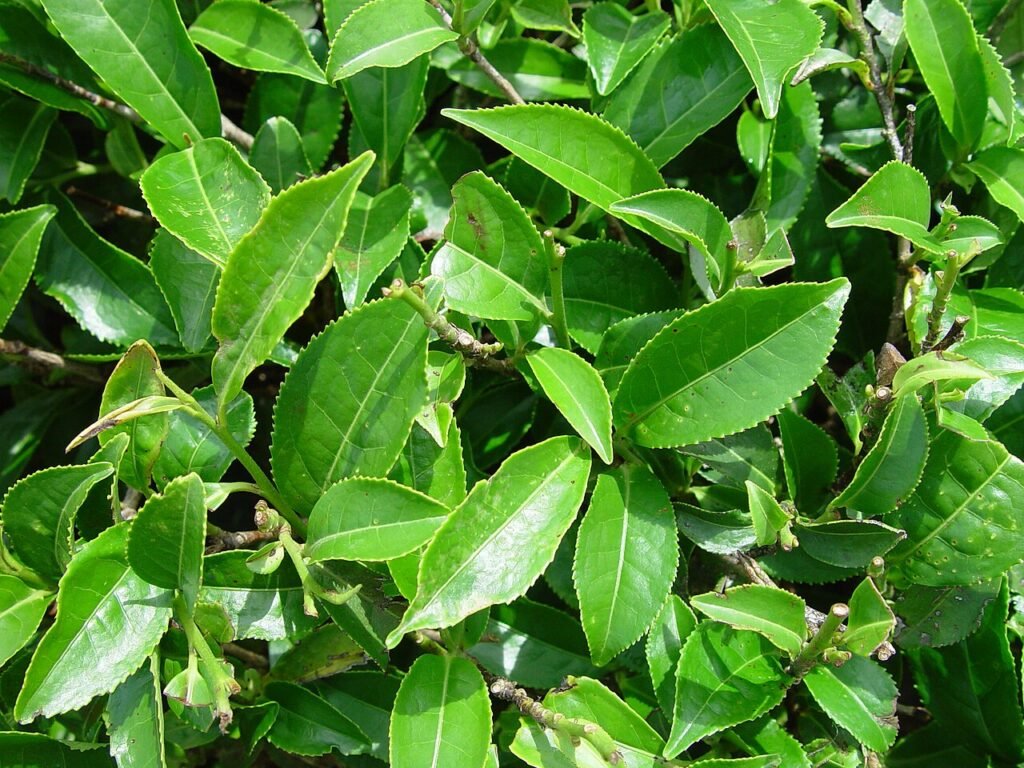
Darjeeling is different. The gardens here were planted largely with Camellia sinensis var. sinensis, the smaller-leafed Chinese variety, brought in during the nineteenth century when the British were trying to establish tea production outside China.
This is the single most useful fact for understanding why Darjeeling does not taste like other Indian black tea. Assamica gives you strength, malt and colour — the backbone of a builder’s tea that stands up to milk. Sinensis at altitude gives you something lighter, more floral, more aromatic, and considerably less forgiving.
It is why Darjeeling in a mug with milk and two sugars is a waste of money, and why people who expect a strong brown cup are so often disappointed by their first cup of an expensive first flush.
The Four Flushes
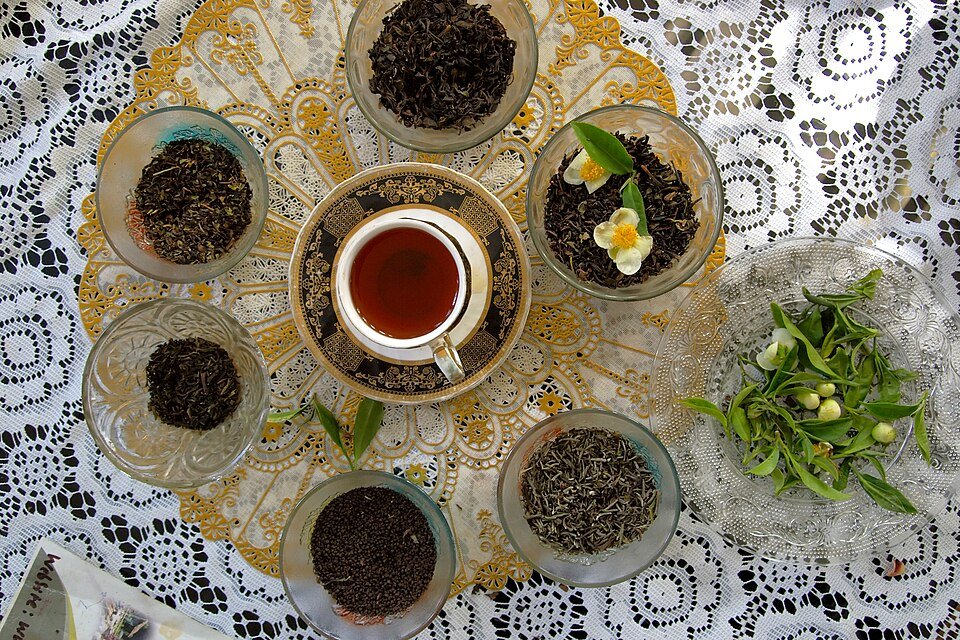
A flush is a picking period. The bushes here do not produce continuously; they push out new growth in distinct waves through the year, and each wave produces a tea with its own character. Understanding the flushes is the difference between buying Darjeeling tea and buying the right Darjeeling tea.
First flush
The first flush is the spring picking, beginning when the bushes wake up after the winter dormancy — typically from around late February into April, though the exact timing shifts with the weather in any given year.
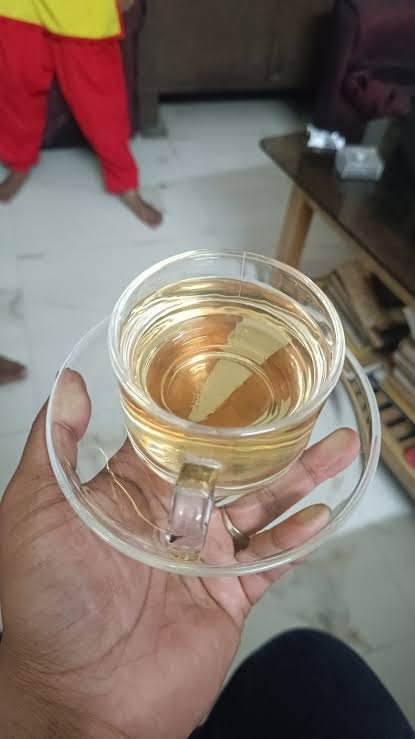
This is the tea that Darjeeling is most famous for among specialists, and the one that confuses newcomers most. The liquor is pale — often a light gold or greenish-yellow rather than anything you would call brown. The flavour is brisk, floral, faintly grassy, sometimes with an astringency that people describe as green-apple or fresh-cut stem. It is closer in character to a green or white tea than to what most people mean by “black tea”, even though it is processed as one.
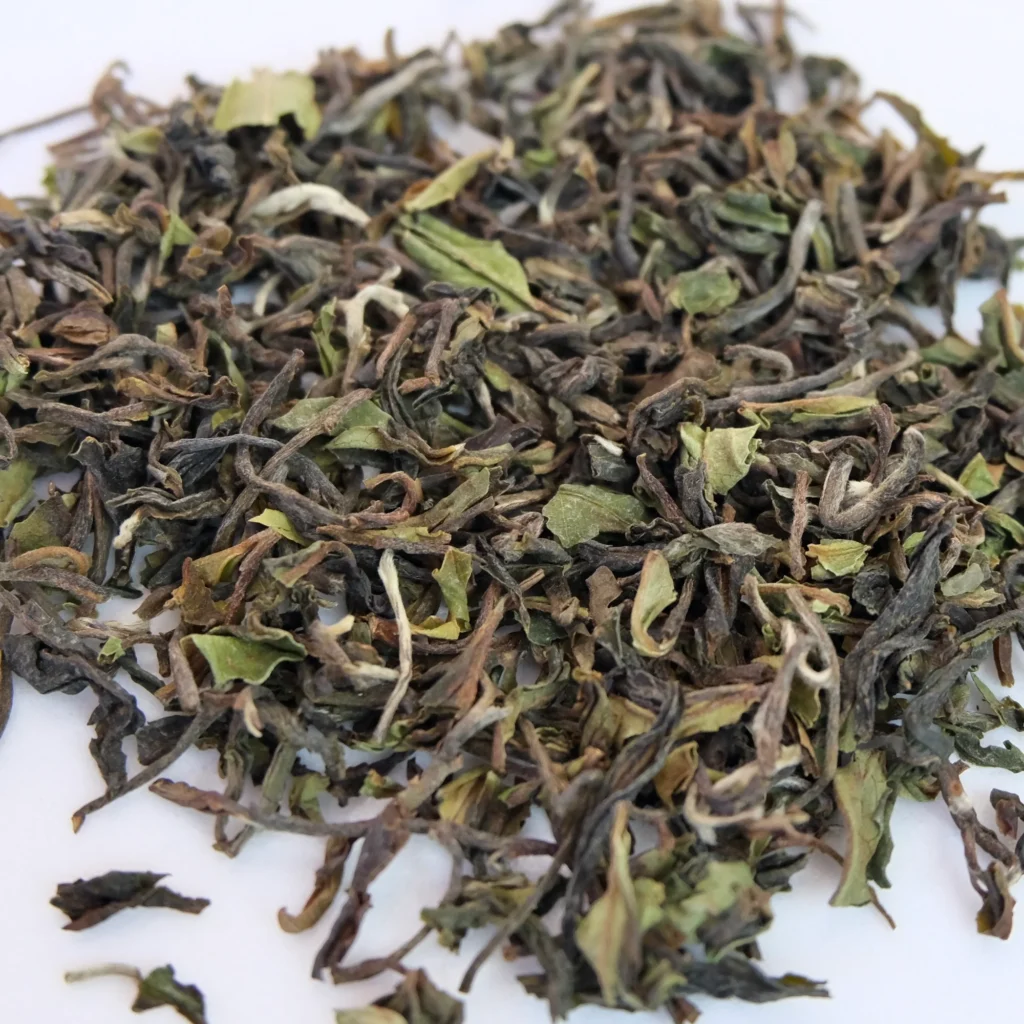
It is also the most expensive, for a straightforward reason: there is not much of it, everyone wants it, and the leaf is at its most delicate. Buyers in Germany and Japan in particular pay serious money for the top first flush lots.
If you drink your tea with milk, do not buy first flush. You will pour forty pounds a kilo of subtlety into a mug and taste none of it.
Second flush
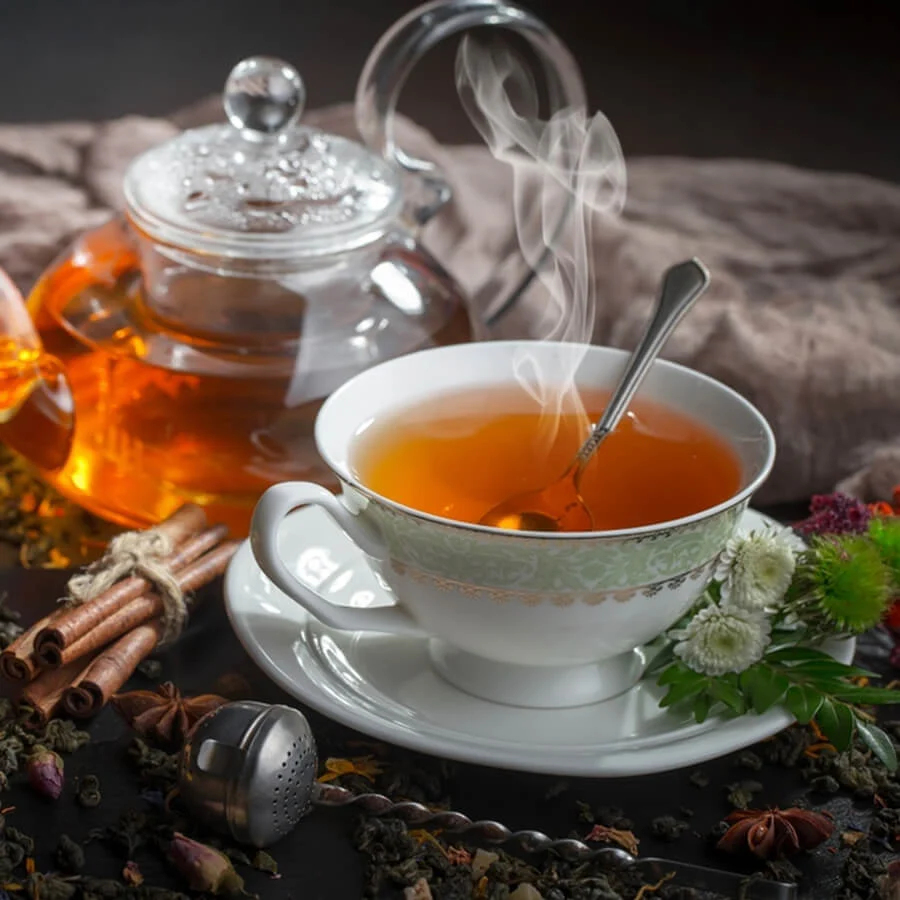
The second flush comes later in the spring and into early summer, roughly May into June. If first flush is the connoisseur’s tea, second flush is the one most people actually enjoy more — and the one I would give anyone drinking Darjeeling for the first time.
The liquor is fuller and darker, amber rather than gold. The flavour is rounder, with more body and less of the sharp astringency. And it carries the characteristic that made Darjeeling famous in the first place: muscatel.
Muscatel is worth explaining properly, because it is one of the few genuinely remarkable things in tea. It is a sweet, slightly winey, grape-like note — the name comes from muscat grapes — and it does not come from the plant alone. It comes from insect damage.
Small sap-sucking insects, commonly called tea jassids or green flies, feed on the leaves during this period. The bush responds to being nibbled by producing defensive compounds, and those compounds are what create the muscatel character. A tea garden that sprayed away every insect would produce a poorer tea. The most sought-after flavour in Darjeeling is, in effect, the taste of a plant under mild stress.
Monsoon flush
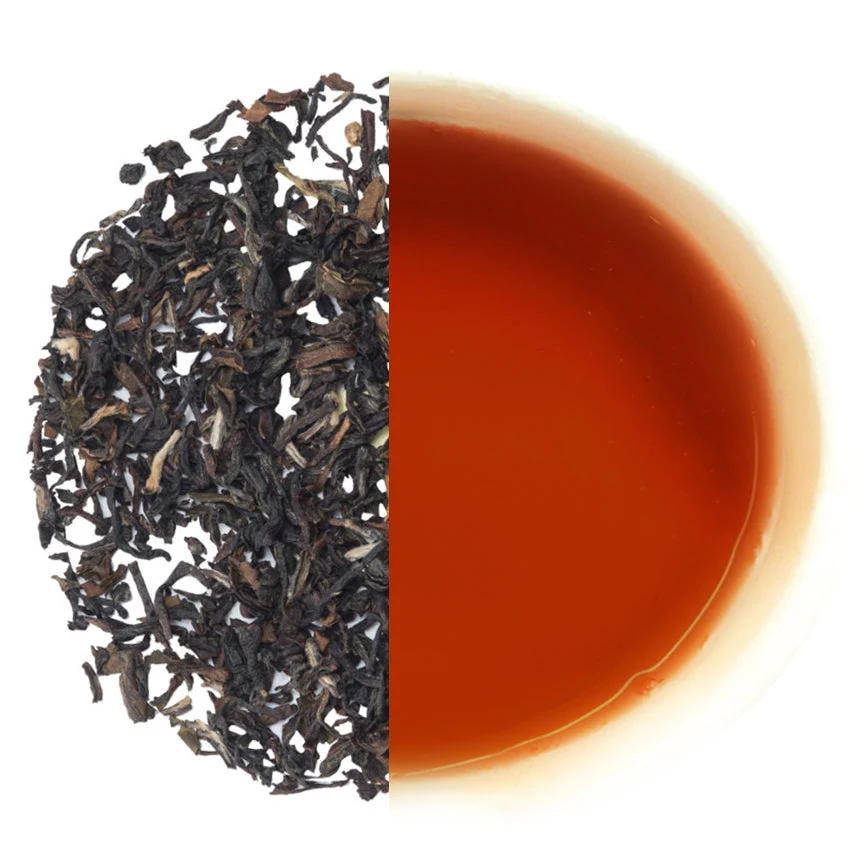
From roughly July into September the rains arrive properly and the bushes grow fast. Fast growth means volume and dilution: the monsoon flush produces the largest quantity and the least distinguished tea of the year. The liquor is darker and stronger but coarser, with little of the aroma that makes the earlier pickings interesting.
Almost none of it is sold as a premium single-garden tea. Most of it goes into blends, into iced tea, into chai, and into the mass market. This is not a scandal — it is simply the workhorse end of the crop.
It is also, for what it is worth, the best value Darjeeling you can buy if what you want is a decent everyday cup with a local origin rather than a tasting experience.
Autumn flush
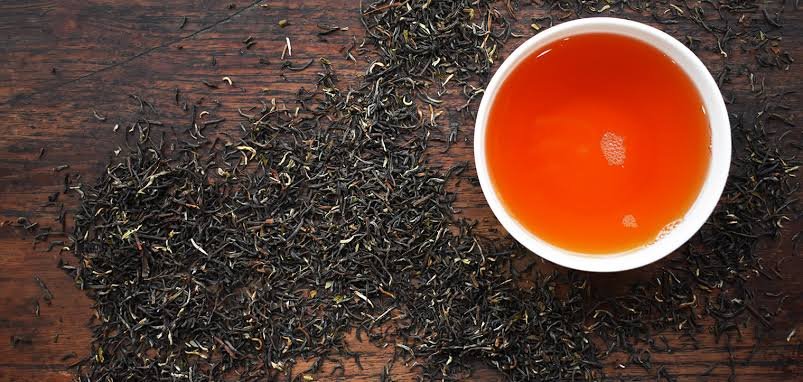
The last picking of the year runs from around October into November, after the rains have cleared. The autumn flush is the most underrated tea in the district.
The liquor is coppery and full, the flavour is smooth and slightly nutty, with a roundness the spring teas do not have. It lacks the fireworks of a good second flush, but it is comfortable, forgiving and considerably cheaper than either spring picking. If you want a Darjeeling you can drink daily without thinking about it too hard, buy autumn flush and stop reading tea marketing.
Reading the grades on the packet
At some point you will encounter a packet labelled something like FTGFOP1 and assume it is a serial number. It is a grading code, and once you know the system it tells you something useful — though less than the people printing it would like you to believe.
The codes describe leaf appearance and size, not quality of flavour. They are built up from a small set of terms:
- OP — Orange Pekoe. Whole leaf. Nothing to do with oranges; the term is historical.
- FOP — Flowery Orange Pekoe. Whole leaf including the young bud.
- GFOP — Golden Flowery. Contains golden tips, the youngest buds.
- TGFOP — Tippy Golden Flowery. A high proportion of those tips.
- FTGFOP — Finest Tippy Golden Flowery. Better still.
- SFTGFOP — Super Finest Tippy Golden Flowery. The top of the ladder.
- A trailing 1 — as in SFTGFOP1 — marks the best lot within that grade.
Below the whole-leaf grades sit BOP (Broken Orange Pekoe), fannings and dust, which are smaller particles. Smaller particles brew faster and stronger, which is why teabags contain them. They are not automatically inferior for the job they do; they are simply a different product.
Here is the honest caveat. Grading in Darjeeling is not enforced by an outside authority. A garden decides what to call its own lot. There is no body checking that one estate’s SFTGFOP1 is the equal of another’s, and there is nothing stopping a producer being generous with the letters. Use the grade as a rough indication of leaf style, and use the garden name, the flush and — if you can — a taste before you buy as your actual guide.
The authenticity problem
Now the uncomfortable part.
Darjeeling produces a limited quantity of tea each year. It is a small district with a finite number of gardens on finite acreage, and unlike most agricultural products, that ceiling cannot be raised much — you cannot make more mountain.
The amount of tea sold globally as “Darjeeling” has, for many years, been understood to exceed what the district actually produces. By a lot.
The scale is worth stating plainly. Tea carrying the Darjeeling name comes from a defined set of registered gardens across the district — commonly given as 87 estates — on roughly seventeen and a half thousand hectares. Annual output is usually put somewhere in the region of eight to ten thousand tonnes, which is a fraction of one per cent of world tea production. The Tea Board publishes current production figures if you want to check the number for yourself rather than take mine.
This is why the legal framework exists. Darjeeling was granted Geographical Indication protection in India, and later secured protected status in the European Union — the same category of protection that stops sparkling wine from Kent being sold as Champagne.
In practice, protection means the Tea Board of India administers a certification mark — a logo depicting a woman holding a tea leaf — and licenses its use to genuine producers and sellers. If a packet carries that mark legitimately, there is a traceable chain behind it.
What to actually look for
- The Tea Board certification mark, not just the word Darjeeling in a nice font.
- A named garden or estate. Genuine sellers are proud of provenance and will tell you which one.
- A flush and a year. “Second flush 2026, [garden name]” is a real claim. “Premium Himalayan Darjeeling” is a marketing phrase.
- Wording that says 100% Darjeeling. A blend can legally use the word if it contains some Darjeeling tea, and many do.
- A price that makes sense. Genuine single-estate first flush cannot be cheap. If it costs the same as supermarket teabags, the arithmetic has already told you the answer.
What is not a red flag
A blend is not a fraud, provided it says so. Plenty of perfectly good everyday teas contain Darjeeling alongside other origins, and they cost less because of it. The problem is not blending. The problem is a blend priced and presented as a single-estate tea.
How to brew it without ruining it
Darjeeling is less forgiving than most black tea, and the most common mistake is treating it like builder’s tea.
Water temperature matters. Boiling water scalds a delicate first flush and strips out harshness instead of aroma. Take the kettle off before it reaches a rolling boil for spring teas — somewhere in the mid-eighties Celsius is a reasonable starting point — and use hotter water for second flush and autumn, which can take it.
Time matters more than people think. Three minutes is a sensible starting point; push to four or five if you want more body. Leave it longer than that and the astringency takes over.
Use more leaf than you expect. Whole-leaf tea is bulky and a level teaspoon of it weighs much less than a teaspoon of dust from a teabag.
And drink it without milk, at least the first time. If you then decide you prefer it with milk, that is entirely your business — but taste what you paid for before you cover it.
Where to buy
Buying in Darjeeling itself is the obvious answer and it is mostly the right one, with one caveat: proximity to the gardens does not guarantee honesty at the counter, and the shops nearest the tourist route are not always the best value. I have written a separate guide to buying tea in town.
Buying abroad, your safest route is a specialist merchant who names the garden, the flush and the year, and who will tell you when their stock was harvested. If you want a sense of what leaf is actually worth at source, the Tea Board publishes monthly average auction prices. Tea is not wine; it does not improve with age. A first flush bought two years after picking is a different and lesser drink than one bought fresh.
Where to start if you have never bought any
Buy a second flush from a named garden. It is the most characteristic Darjeeling, the most enjoyable to a new palate, and forgiving enough that a slightly wrong brewing temperature will not ruin it. If you like it, try a first flush next and see whether the delicacy speaks to you or simply tastes thin.
And if you are coming here, buy after you arrive rather than before. Not because the tea is necessarily cheaper — it is not always — but because tasting three flushes side by side at a counter in Darjeeling teaches you more in ten minutes than any guide written by anybody, including this one.
How tea got here in the first place
Darjeeling is not an ancient tea region. That surprises people, because everything about the place looks like it has been growing tea since the beginning of time. It has not. The industry here is a nineteenth-century colonial project, and the tea itself is an import.
The British acquired Darjeeling from Sikkim in the 1830s and developed it as a hill station — a place for administrators to escape the heat of the plains. At around the same time, the East India Company was urgently looking for somewhere outside China to grow tea, having spent decades dependent on Chinese supply and being deeply unhappy about it.
Darjeeling turned out to be almost accidentally ideal. The altitude, the rainfall, the mist and the drainage suited the Chinese tea plant far better than the hot plains ever had. Experimental plantings in the early 1840s were followed by the first commercial gardens in the 1850s, and within a few decades the district was covered in tea.
Two things follow from this history and both still matter.
The first is the plant. Because the gardens were planted with Chinese-variety stock rather than the native Assam variety, Darjeeling tastes the way it does. That was a decision made in the 1840s and it defines the product to this day.
The second is the structure of the industry. The garden system here — large estates with resident workforces, established under colonial ownership — is a nineteenth-century inheritance, and many of the tensions in the industry today are downstream of it. The bungalows that tourists now pay to stay in were built for managers. That is not a reason to avoid them, but it is worth knowing what you are sleeping in.
The gardens
Darjeeling tea is sold by garden, and after a while the names start to mean something to you the way vineyard names do to people who care about wine. Some are widely known outside India; others produce excellent tea and are barely known at all.
What distinguishes them is a combination of altitude, aspect, the age of the bushes, the specific plant stock, and the skill of the people making decisions during processing. There is a dedicated research centre for Darjeeling tea at Kurseong working on exactly these variables. Two gardens on opposite sides of the same valley can produce noticeably different teas from the same week’s picking.
If you are buying seriously, the useful approach is to find one garden whose style you like and follow it across flushes and years, rather than chasing whichever name is most famous. Reputation and current quality are not the same thing, and gardens have good years and bad ones like anywhere else.
Common questions
Is Darjeeling tea black, green or white?
Usually black, but the district produces green, white and oolong-style teas as well. The confusion comes from first flush, which is processed as a black tea but is so lightly oxidised that it looks and tastes closer to a green. It is a black tea by method, not by appearance.
Does Darjeeling tea have caffeine?
Yes. It is a true tea from Camellia sinensis, so it contains caffeine. The amount in your cup depends more on how much leaf you use and how long you brew it than on the flush.
Should I add milk?
Not to first flush, and preferably not to second. Both are built around aromatic subtleties that milk erases. If you want a tea for milk, buy autumn or monsoon flush, or buy Assam.
How long does it keep?
Best within a year of picking, and first flush noticeably sooner than that. It does not improve with age, whatever anyone tells you.
Is more expensive always better?
No, but very cheap is reliably worse. Price is a poor guide at the top of the market and an extremely good one at the bottom.
A note on what this tea costs the people who pick it
It would be dishonest to write two thousand words about Darjeeling tea as a luxury product without noting that the industry it comes from is under real strain. The gardens face ageing bushes, climate pressure, competition from cheaper origins, and long-running disputes over wages and working conditions. Several estates have closed or changed hands in recent years.
None of that should stop you buying the tea. If anything it is an argument for buying the good stuff from named gardens rather than the cheap stuff of uncertain origin, because the money at least ends up in a traceable place. But it is worth knowing that the romance in the marketing and the reality on the slope are not the same thing.